
A Research-Based Guide to Cow Cuddling, Bovine-Assisted Therapy, Stress, Anxiety and Emotional Well-Being.
Introduction: Why Are People Turning Toward Cows for Wellness?
Modern lifestyles can leave people with limited opportunities to interact with nature and animals.
Long working hours, digital screens, urban environments and constant stimulation can create a desire for experiences that feel slower, quieter and more connected to nature.
This has contributed to growing interest in animal-assisted activities, farm-based wellness and Green Care.
Dogs and horses have traditionally received much more attention in animal-assisted research. Cows, however, are now beginning to enter this conversation.
Cow cuddling offers a simple concept:
Slow down. Spend time with a calm animal. Observe. Touch gently. Connect with nature.
But behind this simple experience lies a much more interesting scientific question:
Can interaction with cattle influence human emotional well-being?
Researchers are beginning to investigate exactly that.
What Is Cow Cuddling?
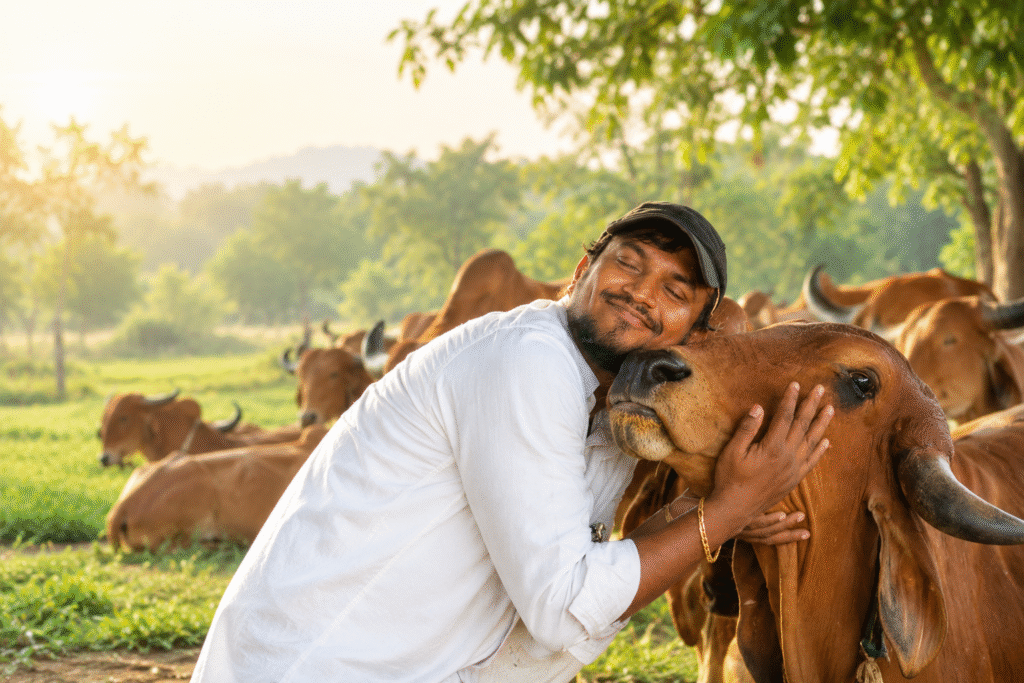
Cow cuddling refers to calm, voluntary interaction between humans and cattle.
Depending on the program, an experience may include:
- Gentle stroking
- Brushing
- Scratching
- Sitting near a cow
- Talking softly
- Observing cow behavior
- Gentle physical contact
- Guided mindfulness
- Learning about cattle
- Spending time in a farm environment
A professionally designed experience should never mean forcing a cow to interact with a person.
The emphasis should be on calm interaction, safety, respect and animal welfare.
What Is Bovine-Assisted Therapy?
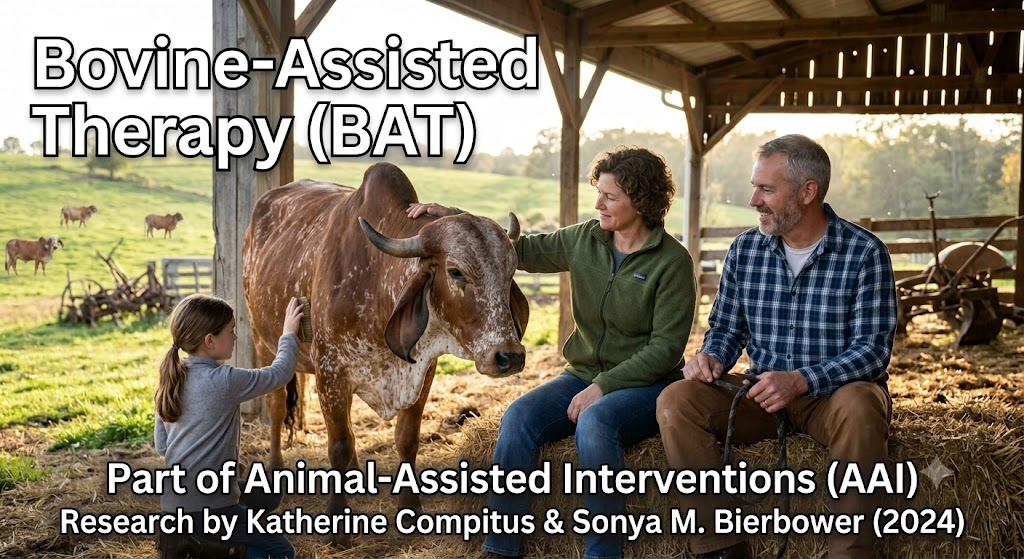
The broader scientific term is Bovine-Assisted Therapy (BAT).
It can be considered within the larger field of Animal-Assisted Interventions (AAI).
Animal-assisted therapy generally involves an animal being incorporated into a structured therapeutic process, often alongside a trained professional.
The 2024 paper by Katherine Compitus and Sonya M. Bierbower specifically examined the potential of cattle within this area. The authors explain that animal-assisted therapy has traditionally focused on animals such as dogs and cats, while cattle have received considerably less research attention.
This makes cattle an interesting emerging area of research.
What Does the Research Say?
1. A 15-Minute Cow Interaction and Anxiety
One of the most important studies currently available was published by Berget, Vas, Pedersen, Uvnäs-Moberg and Newberry in 2023.
The researchers investigated whether a short interaction with cows was associated with changes in:
- State anxiety
- Plasma oxytocin
The study involved 18 healthy female nursing students.
Each participant interacted with an unfamiliar cow for approximately 15 minutes, including stroking, brushing, scratching, eye contact, speaking and other gentle interaction.
What happened?
After the 15-minute interaction, researchers observed a modest reduction in participants’ state-anxiety scores.
This is an important finding because the researchers used the State-Trait Anxiety Inventory – State Subscale (STAI-SS) rather than simply asking participants whether they felt relaxed.
Interestingly, 16 of the 18 participants described their experience with the cow as “very good,” while the remaining two described it as “good.”
But what about oxytocin?
This is where scientific accuracy is particularly important.
“Science proves that hugging a cow increases oxytocin.”
Instead, the researchers found that the relationship between oxytocin and anxiety was more complicated and varied among individuals.
2. What Is the Connection Between Cows and Emotional Well-Being?
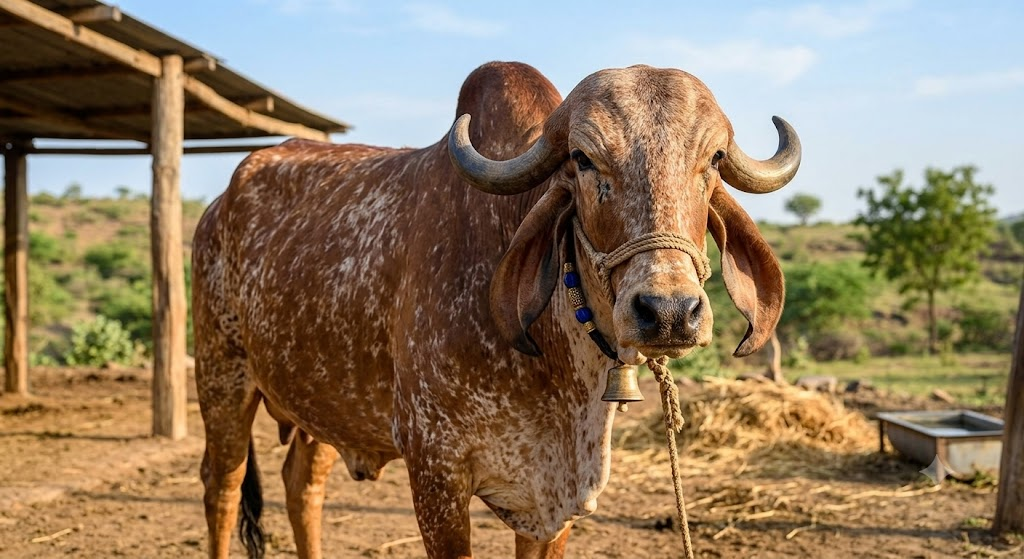
The 2023 research suggests that interacting with cows may be associated with an immediate reduction in subjective anxiety.
But why might the experience feel calming?
There may be several contributing factors.
Gentle physical contact
Slow brushing and stroking can encourage people to focus on physical sensations rather than everyday distractions.
Attention and presence
When interacting with an animal, people naturally pay attention to movement, breathing, sounds and body language.
This can create an experience similar to mindful attention.
Nature and farm environment
Cow interaction usually occurs in a farm or outdoor environment.
The combination of animals, open space, natural surroundings and reduced digital stimulation may contribute to the overall experience.
Emotional connection
Humans can form meaningful relationships with animals.
The experience of being accepted by a calm animal may itself feel emotionally rewarding.
3. What Does the 2024 Bovine-Assisted Therapy Research Add?
In 2024, Katherine Compitus and Sonya M. Bierbower published Cow cuddling: Cognitive considerations in bovine-assisted therapy in Human-Animal Interactions.
Their work is particularly important because it expands the discussion beyond:
“How does the human feel?”
and asks:
“What is happening to the animal during the interaction?”
This is essential for the future of cow-assisted wellness.
The Cow Is Also a Participant
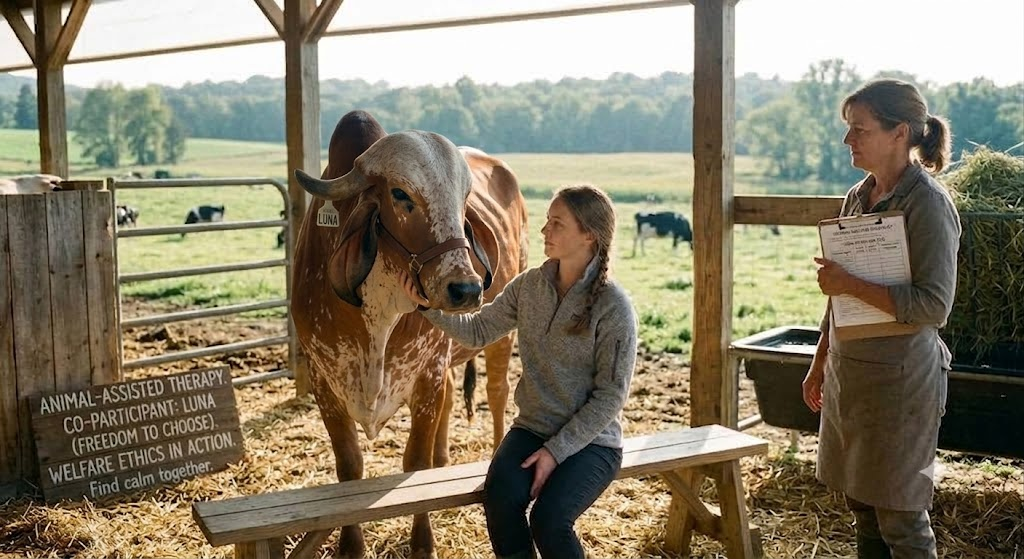
A cow is not simply a tool for improving someone’s mood.
It is a living, social animal with its own preferences, behavior and welfare requirements.
Therefore, a responsible cow-cuddling program should consider both sides of the interaction.
Human welfare
The participant should experience:
- Safety
- Comfort
- Calmness
- Appropriate guidance
- Respectful interaction
Cow welfare
The animal should have:
- Appropriate handling
- Sufficient space
- Freedom to move away
- Rest opportunities
- Proper nutrition and care
- Monitoring for stress
- Choice about whether to participate
This creates the foundation for an ethical human–cow experience.
Why Animal Choice Matters
Imagine that a visitor approaches a cow.
The cow calmly remains nearby and accepts gentle brushing.
That may indicate willingness to participate.
Now imagine another cow repeatedly moves away.
The correct response is not to follow the animal and force contact.
The correct response is to respect its decision.
This principle should be central to professional cow-cuddling programs.
The 2024 research emphasizes the importance of considering cattle behavior and welfare when developing bovine-assisted interventions.
What About the 2021 Cow Cuddling Research?
In 2021, Shubham Sharma published an article titled “Cow cuddling: psychotherapy to reduce stress and anxiety” in the International Journal of Indian Psychology.
The article discusses cow cuddling in relation to:
- Stress
- Anxiety
- Human–animal interaction
- Touch
- Oxytocin
- Emotional well-being
It helped bring attention to cow cuddling as an emerging wellness concept.
However, it is important to distinguish this article from the 2023 experimental research.
The Sharma article discusses the potential psychological and therapeutic aspects of cow interaction.
The 2021 study “’Cow cuddling’ psychotherapy to reduce stress and anxiety” by Shubham Sharma was published in the International Journal of Indian Psychology (Vol. 9, Issue 1). It explored the psychological and physiological effects of cow-assisted interactions as a form of animal-assisted therapy (AAT).
Core Concept & Origins
Promotes mindfulness by encouraging participants to focus on physical sensations and the animal’s rhythmic breathing.
The Practice: Known as koe knuffelen (cow hugging) in the Netherlands, where the trend originated. It involves sitting with, petting, brushing, leaning against, or hugging a cow.
Physiological Basis: A cow’s biological traits—specifically a higher core body temperature (~38.5°C/101.5°F), a slower heart rate, and massive size—create a grounding effect for humans when lying against them.
Key Findings of the Study
Stress & Anxiety Reduction: The study observed a significant decrease in self-reported stress and anxiety levels among all 45 participants after taking cow cuddling sessions.
Hormonal Response: Physical touch with the animals stimulates tactile receptors, lowering cortisol (stress hormone) while boosting oxytocin (the social bonding hormone), dopamine, and serotonin.
Emotional Experience: Participants reported feelings of warmth, acceptance, and safety, describing the encounter as a calming exchange of positive energy.
Therapeutic Applications
Serves as a complementary intervention within bovine-assisted therapy to combat mental health struggles exacerbated by modern lifestyle stressors.
So, Is Cow Cuddling a Treatment?
This is perhaps the most important question.
The scientific answer is:
Research is promising, but it is still developing.
Current evidence does justify saying that cow cuddling:
- Cures anxiety
- Treats depression
- Replaces psychotherapy
- Replaces psychiatric treatment
- Guarantees stress reduction
- “Heals” mental illness
Instead, it is more accurate to say:
Early research suggests that calm, structured interaction with cattle may support relaxation, positive emotional experiences and short-term reductions in self-reported anxiety.
That is a scientifically stronger and more responsible statement.
Potential Benefits of a Structured Cow-Cuddling Experience
Based on the current research, cow interaction may have potential as a wellness and complementary human–animal experience.
Possible areas of benefit include:
1. Relaxation
Spending quiet time with an animal can encourage participants to slow down and focus on the present moment.
2. Emotional Well-Being
Positive interaction with animals can create feelings of comfort, enjoyment and connection.
3. Nature Connection
Farm-based experiences can reconnect people with animals, agriculture and the natural environment.
4. Human–Animal Bond
Direct interaction provides an opportunity to develop familiarity and trust between people and animals.
5. Short-Term Anxiety Reduction
The 2023 Berget study provides evidence of a modest reduction in self-reported state anxiety after a 15-minute cow interaction.
How Should a Professional Cow-Cuddling Session Be Conducted?
A professional program should go beyond simply allowing visitors to hug cows.
Step 1: Orientation
Participants learn basic cow behavior and safety.
Step 2: Observation
Before touching the animal, participants observe:
- Body language
- Position
- Movement
- Interest in people
Step 3: Gentle Interaction
Participants may be guided in:
- Brushing
- Gentle stroking
- Quiet communication
- Sitting near the cow
Step 4: Respect Animal Choice
The cow should always be allowed to move away.
Step 5: Reflection
Participants can reflect on how they felt before and after the experience.
This creates a more structured human–animal wellness experience.
Safety Should Always Come First
Cows are large and powerful animals.
Even a calm animal can move suddenly.
Therefore, participants should receive clear instructions about:
- Approaching cattle
- Safe positioning
- Touching
- Personal space
- Recognizing warning signs
- Avoiding sudden movements
- Following the handler’s instructions
Children should receive age-appropriate supervision.
The program should also have trained handlers who understand cattle behavior.
What Does “Scientific Cow Cuddling” Really Mean?
Scientific cow cuddling does not mean putting a scientific label on an ordinary farm activity.
It means designing the experience around principles supported by research:
Animal welfare + participant safety + trained handling + structured interaction + responsible communication
That honesty is what makes a wellness program credible.
Conclusion
Cow cuddling is an emerging field at the intersection of animal-assisted intervention, farm-based wellness, nature connection and human–animal relationships.
Scientific References
1. Berget, B., Vas, J., Pedersen, G., Uvnäs-Moberg, K., & Newberry, R. C. (2023).
Oxytocin levels and self-reported anxiety during interactions between humans and cows. Frontiers in Psychology, 14, 1252463.
Read the full scientific article — PMC
2. Compitus, K., & Bierbower, S. M. (2024).
Cow cuddling: Cognitive considerations in bovine-assisted therapy. Human-Animal Interactions. DOI: 10.1079/hai.2024.0016.
Read the research article
3. Sharma, S. (2021).
Cow cuddling: psychotherapy to reduce stress and anxiety. International Journal of Indian Psychology, 9(1), 86–90. DOI: 10.25215/0901.011.
Read the article