
Learn practical dairy farming, fodder management, cattle nutrition, farm economics and business scaling through GoDesi’s 3-Day Hands-On Dairy Farming Training Program in Hyderabad, Telangana.
Register for the GoDesi Dairy Farming Training Program
Ready to start or expand your dairy farming business?
Take the next step and register your interest in GoDesi’s Practical Dairy Farming Training Program.
- Training: 3-Day Dairy Farming Project Management Program
- Location: GoDesi Agro Farm, Hyderabad, Telangana
- Batch schedule: Weekday batches, subject to availability
- Registration: Contact the GoDesi team to enquire about upcoming batches and secure your participation.
- Payment details: For payment details, please contact us.
Call or WhatsApp: 9573900667
Website: www.godesimilk.com
Contact the team with your name, contact number and preferred training schedule to begin the registration process.
Most commercial dairy farms do not struggle because of a lack of effort. They struggle because of preventable operational gaps such as excess cattle feeding, poor land-to-fodder planning, inefficient labour allocation and inadequate herd management.
Starting a commercial dairy farm in India requires more than purchasing quality cattle and constructing a shed. Entrepreneurs must understand how to manage daily farm operations, control production costs, maintain consistent milk quality and build a sustainable dairy business.
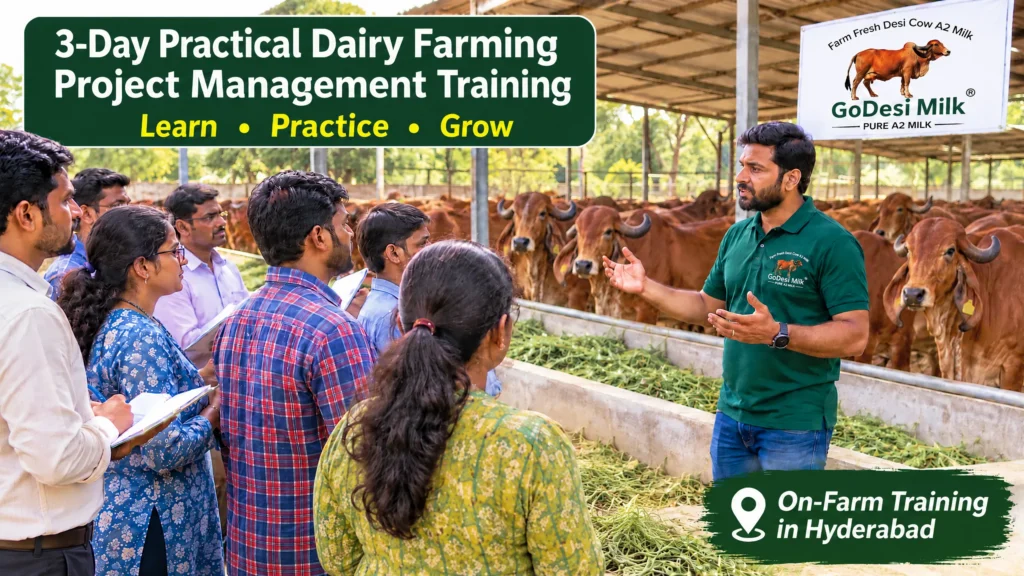
With 10 years of operational experience managing 300+ cattle at GoDesi Agro Farm in Hyderabad, Telangana, GoDesi introduces a 3-Day Practical Dairy Farming Project Management Training Program designed to bridge the gap between theoretical knowledge and real-world farm execution.
Unlike conventional classroom-based dairy farming courses, this program takes place directly on a working dairy farm. Participants learn through live demonstrations, practical activities and direct interaction with experienced farm operators.
Whether you are planning to establish a 20-cow dairy farm or scale an existing operation to 100+ cattle, this workshop provides practical knowledge to help you plan, operate and grow your dairy enterprise.
Why Practical Dairy Farming Training Is Important
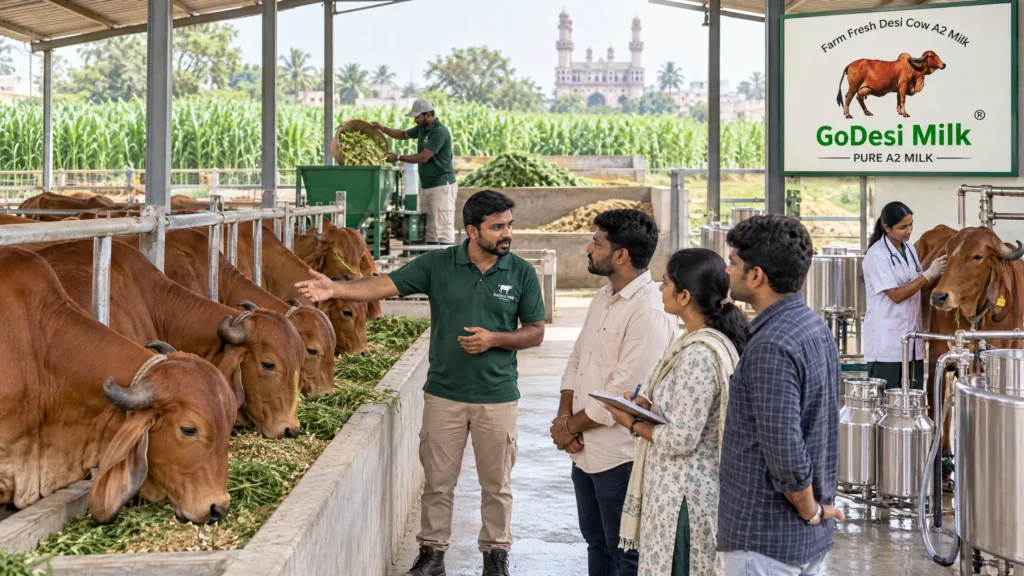
Many aspiring dairy entrepreneurs invest heavily in cattle, infrastructure and land without understanding the operational systems required to maintain profitability.
Some common challenges include:
- Selecting unsuitable land for dairy farm development.
- Miscalculating land requirements for green fodder production.
- Overfeeding cattle and increasing unnecessary feed expenses.
- Poor Total Mixed Ration (TMR) planning.
- Inefficient cattle-to-worker ratios.
- Lack of preventive veterinary care and vaccination planning.
- Inadequate milk hygiene and handling procedures.
- Poor understanding of per-litre milk production costs.
- Lack of customer acquisition and dairy product marketing strategies.
A successful commercial dairy farm depends on the coordination of all these activities.
GoDesi’s on-farm dairy training program focuses on practical Standard Operating Procedures (SOPs) that help participants understand how a dairy farm functions on a day-to-day basis.
Inside the 3-Day Dairy Farming Project Management Training Program
The complete training is divided into three major stages: infrastructure and fodder management, herd operations and health management, and dairy economics and business development.
Day 1: Infrastructure, Land Planning and Fodder Management
The first day focuses on establishing a strong foundation for a commercial dairy farm while controlling initial investment and recurring expenses.
Module 1: Land Acquisition, Farm Setup and Investment Planning
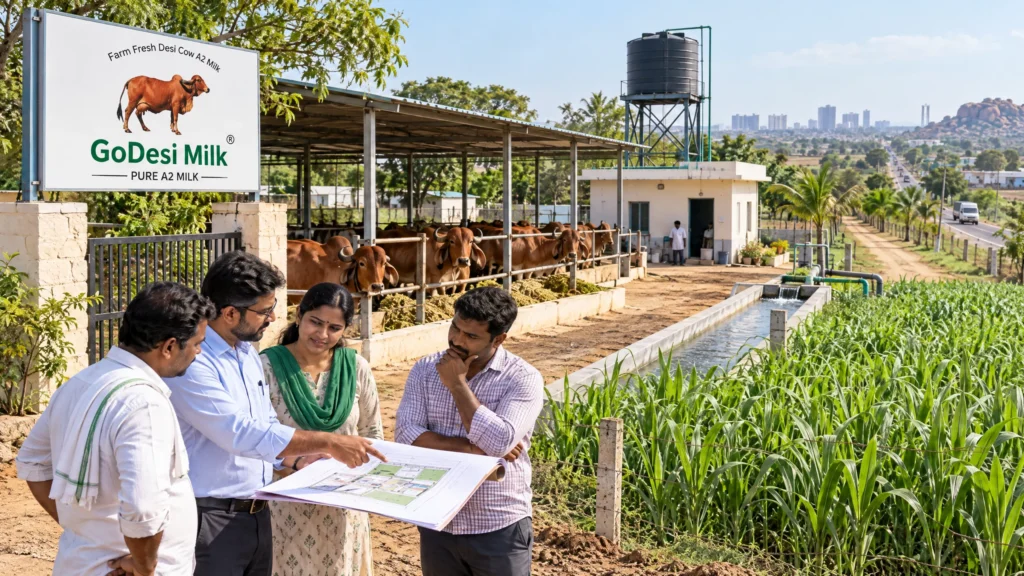
Choosing the right land is one of the most important decisions when starting a dairy farm.
Participants learn how to evaluate:
- Leased agricultural land versus purchasing land.
- Raw land versus readymade dairy farms.
- Availability of water and irrigation facilities.
- Accessibility to nearby towns and milk markets.
- Cow shed construction and staff accommodation requirements.
- Initial capital investment and infrastructure planning.
The training also introduces a strategic land-planning approach involving approximately 2–3 acres near a city for the core dairy farm, along with 3–4 acres of additional cultivable land leased from local farmers for fodder production.
Participants understand how to plan cattle induction, arrange infrastructure and identify potential milk customers before starting full-scale operations.
Module 2: Green Fodder Cultivation and Irrigation Management
Fodder availability directly influences cattle nutrition, milk production and operating expenses.
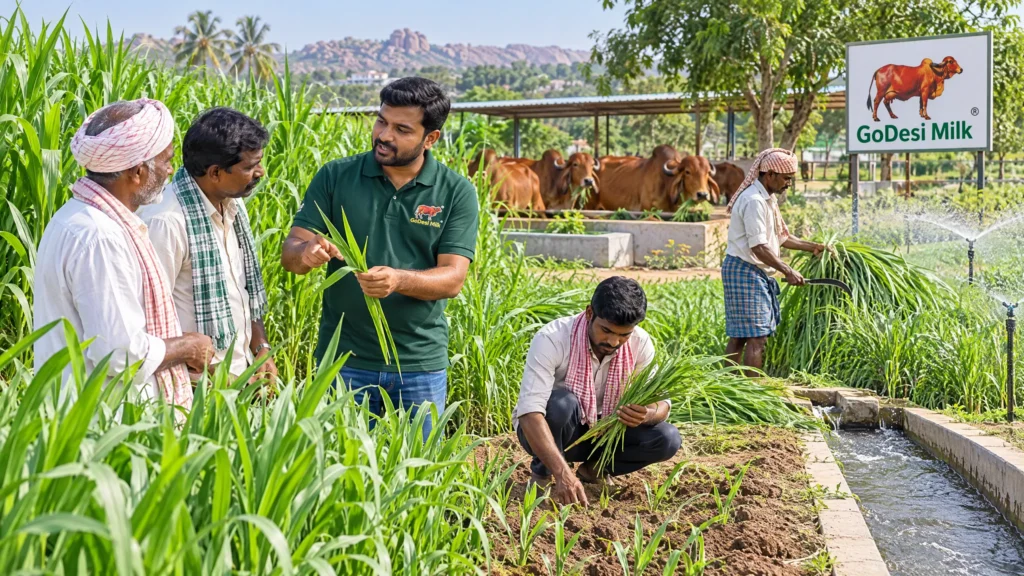
This module provides practical exposure to:
- Super Napier cultivation.
- Red Napier cultivation.
- Grass sampling and soil preparation.
- Fodder sowing and crop management.
- Grass harvesting techniques.
- Canal irrigation systems.
- Sprinkler irrigation systems.
- Water management during different seasons.
Participants learn how to develop a reliable green fodder supply system instead of depending entirely on external feed suppliers.
Module 3: Cattle Nutrition and Total Mixed Ration (TMR) Management
Feed management is one of the largest recurring expenses in dairy farming.
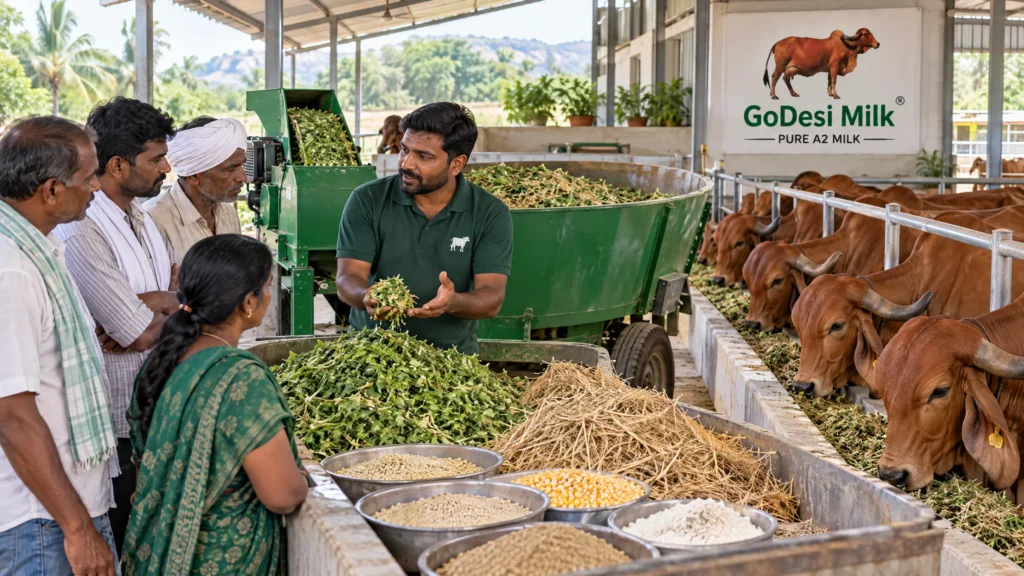
Overfeeding and incorrect ration planning can significantly increase production costs without delivering proportional improvements in milk yield.
Participants learn:
- Green fodder and dry fodder management.
- Chaff cutter operation and maintenance.
- Feed processing and preparation.
- Total Mixed Ration (TMR) formulation.
- Balancing carbohydrates, proteins and other nutritional requirements.
- Daily ration planning.
- Feed wastage reduction.
- Cattle feeding cost management.
The objective is to understand how disciplined cattle nutrition supports herd health, milk production and dairy farm profitability.
Day 2: Herd Operations, Breeding and Preventive Health Management
The second day focuses on managing cattle efficiently through structured daily operations, reproductive planning and preventive healthcare.
Module 4: Traditional Hand Milking Operations and Gir Cow Herd Management
At GoDesi Agro Farm, we follow traditional hand-milking practices for our Gir cows without using milking machines. Participants get practical exposure to the traditional milking process and learn how to handle cows gently while maintaining milk hygiene and quality.
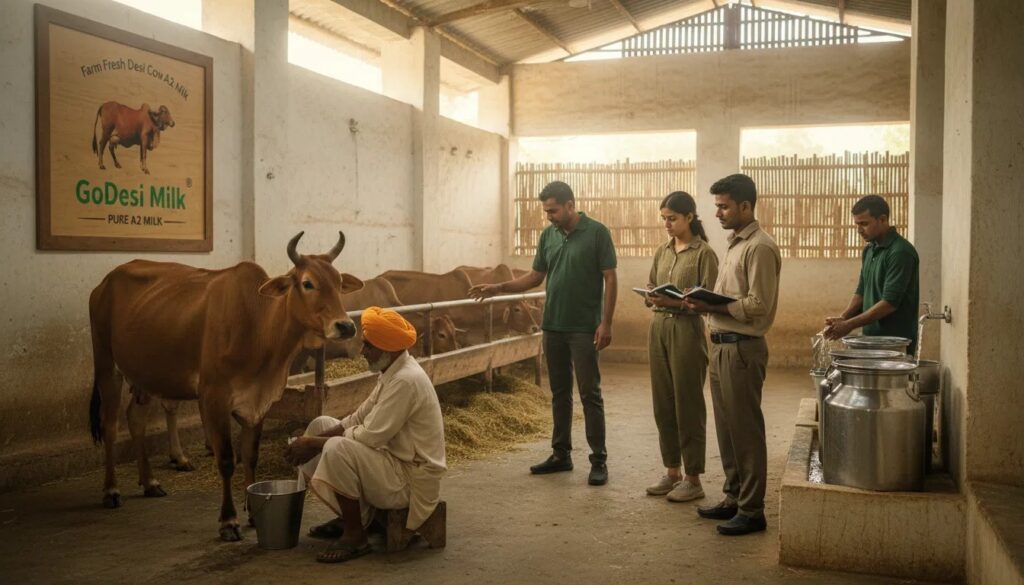
Participants learn:
- Traditional hand-milking techniques for Gir cows.
- Morning and evening milking procedures.
- Proper hand hygiene before and after milking.
- Gentle and stress-free handling of Gir cows.
- Preparing cows for milking and maintaining a calm environment.
- Hygienic collection and handling of freshly milked A2 milk.
- Cleaning and sanitising milk collection vessels.
- Monitoring individual cow milk production.
- Organising cattle into batches for feeding, milking and health monitoring.
- Identifying common challenges during daily milking operations.
Module 5: Breed Quality, Reproductive Management and Herd Multiplication
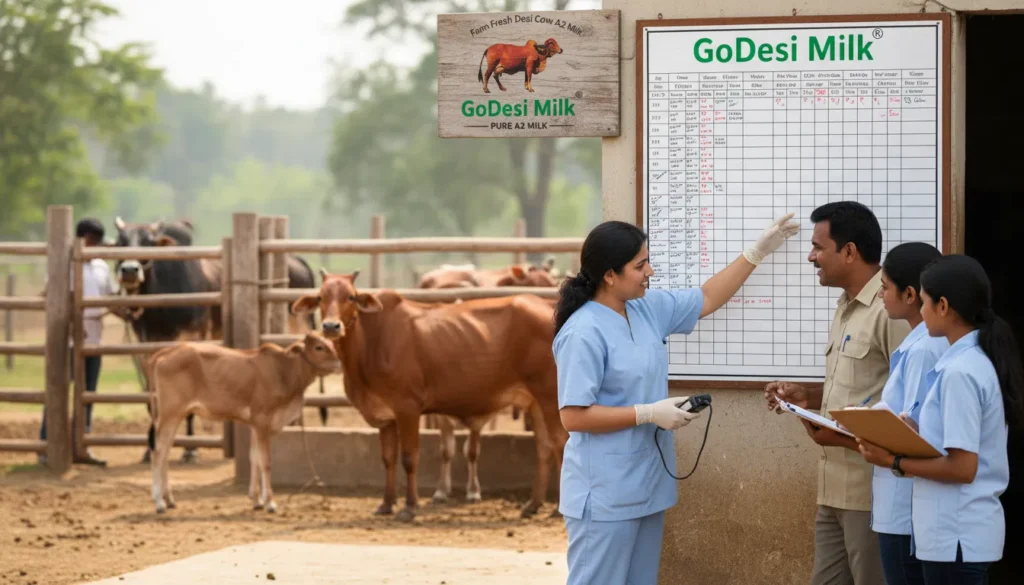
A sustainable dairy farm requires long-term planning for cattle quality and herd development.
This module covers:
- Understanding important cattle breed characteristics.
- Evaluating breed quality.
- Cow reproductive cycles.
- Heat-period identification and tracking.
- Natural breeding and crossing management.
- Bull management.
- Pregnancy monitoring.
- Long-term herd multiplication planning.
Participants understand how reproductive management contributes to the future growth of a dairy farm.
Module 6: Preventive Veterinary Care and Animal Health SOPs
Preventive healthcare plays an important role in reducing avoidable cattle health problems and maintaining consistent farm operations.
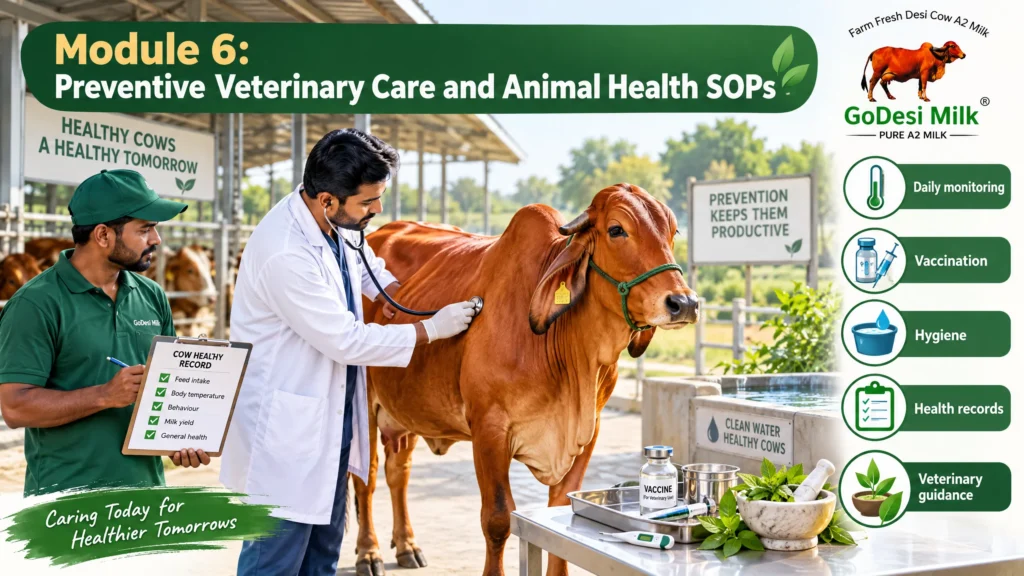
Training includes:
- Daily cattle health monitoring.
- Identifying common health abnormalities.
- Preventive veterinary care.
- Vaccination schedules.
- Veterinary consultation and treatment coordination.
- Farm hygiene and disease prevention.
- Maintaining individual cattle health records.
The program also discusses traditional and Ayurvedic animal-care practices alongside veterinary guidance. Any medication or treatment must be selected and administered under appropriate veterinary supervision.
Day 3: Dairy Economics, Labour Optimization and Business Scaling
The third day focuses on transforming dairy farm operations into a commercially sustainable business.
Module 7: Dairy Farm Labour Management and Resource Optimization
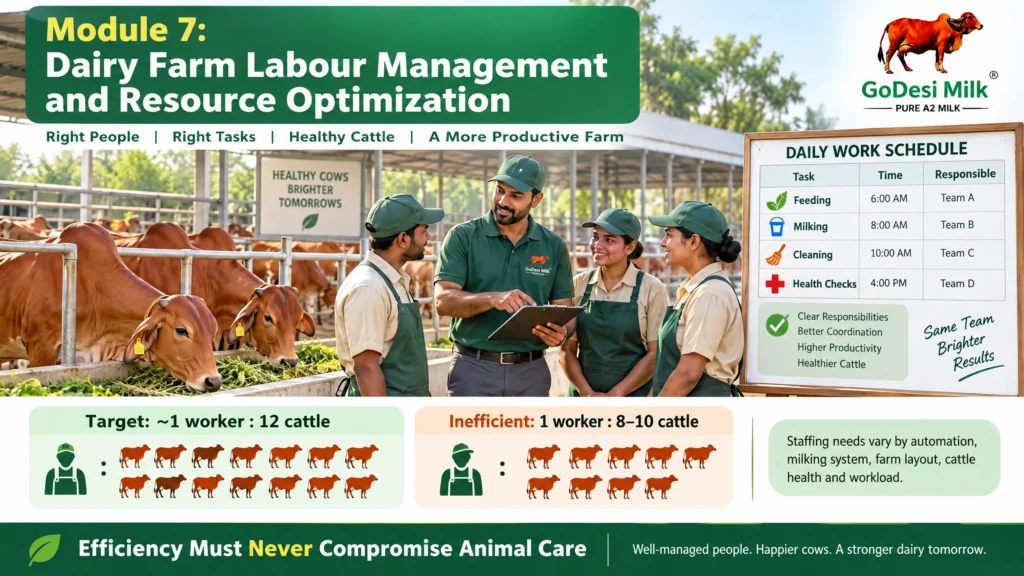
Labour expenses can significantly affect dairy farm profitability.
Participants learn how to:
- Identify and recruit suitable farm workers.
- Structure employee responsibilities.
- Plan staff salaries.
- Assign daily operational targets.
- Improve workforce productivity.
- Manage staff schedules and accountability.
Understanding the cattle-to-worker ratio
The training introduces a target benchmark of approximately one worker for every 12 cattle, compared with an inefficient ratio of one worker for every 8–10 cattle.
Actual staffing requirements depend on automation, milking systems, farm layout, cattle health and daily workload.
The objective is to improve labour efficiency without compromising animal care.
Module 8: Dairy Farm Economics, Unit Economics and Risk Management
A dairy business must understand its actual cost of production before deciding milk prices or expansion plans.
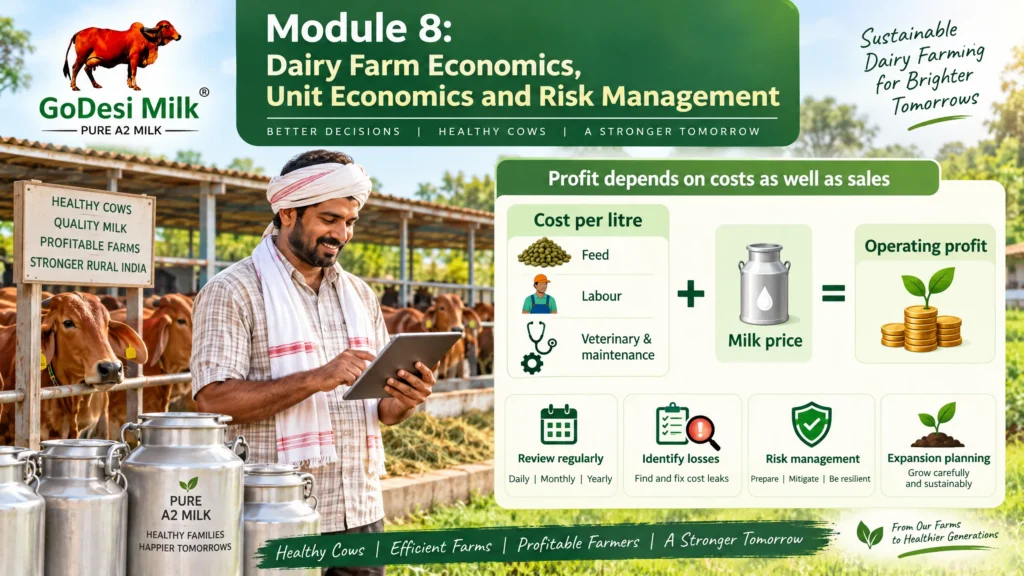
This module covers:
- Calculating per-litre milk production costs.
- Understanding feed expenses.
- Labour cost calculations.
- Veterinary and maintenance expenses.
- Milk selling price determination.
- Daily, monthly and annual profitability.
- Identifying operational losses.
- Managing financial risks.
- Planning for farm expansion.
Participants learn how to evaluate whether their dairy farm is generating sustainable operating profits rather than focusing only on total milk sales.
Module 9: Value-Added Dairy Products, Marketing and Brand Development
Selling raw milk is only one way to generate revenue from a dairy farm.
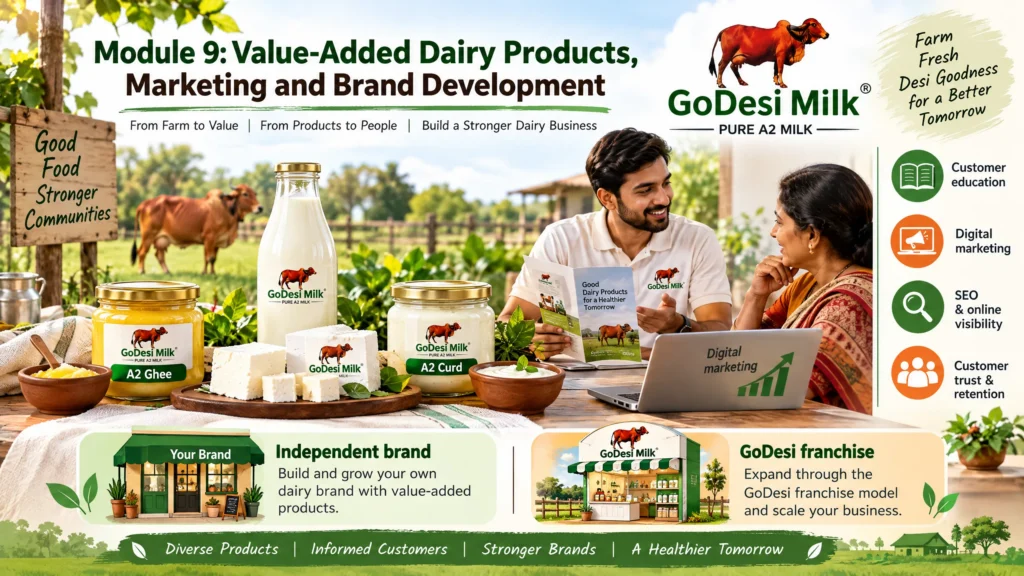
Entrepreneurs can explore additional opportunities through value-added dairy products.
Value-added dairy product opportunities
- Pure A2 Ghee.
- A2 Paneer.
- A2 Curd.
- Traditional dairy products.
Participants learn about product diversification, basic business planning and opportunities to improve revenue through dairy processing.
Customer education and digital marketing
Building customer trust is essential for a successful A2 dairy brand.
The training introduces:
- Local customer acquisition.
- SEO and digital marketing.
- Educational brochures.
- Product communication.
- Building awareness about A2 milk.
- Customer retention strategies.
- Online brand visibility.
Independent dairy brand or franchise model
Participants can explore two business development approaches:
- Establishing an independent farm-fresh dairy brand.
- Exploring GoDesi’s pan-India dairy franchise model.
This helps aspiring entrepreneurs understand the different approaches to entering and growing the dairy market.
Optional Add-On: Cow Cuddling Therapy and Agritourism
Dairy farms can also explore supplementary revenue opportunities through farm-based visitor experiences.
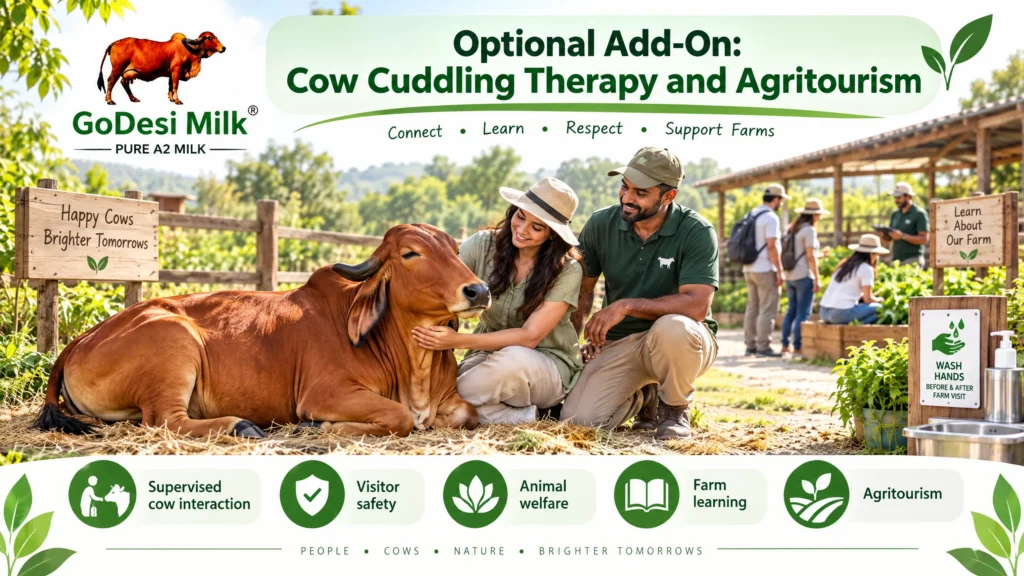
GoDesi introduces Cow Cuddling Therapy, also referred to as Bovine-Assisted Therapy, as an optional training and agritourism concept.
Participants can learn about:
- Organizing farm visits.
- Cow interaction experiences.
- Visitor safety and animal welfare.
- Farm-based educational activities.
- Customer experience management.
- Agritourism business opportunities.
The program also discusses possible pricing approaches for farm experiences. For payment details, please contact us.
Participants interested in formal Cow Cuddling Therapy certification can enquire about the additional certification program. For payment details, please contact us.
GoDesi Dairy Farming Training Program: Fees and Schedule
The training is conducted at GoDesi Agro Farm, Hyderabad, Telangana.
| Program Component | Details |
|---|---|
| Dairy Farming Project Management Training | For payment details, please contact us. |
| Training Duration | 3 days |
| Cow Cuddling Therapy Certification | Additional certification option available |
| Combined Program | For payment details, please contact us. |
| Combined Training Duration | 6 days or an intensive 3–4-day schedule |
| Daily Training Hours | 5–6 hours for the six-day format; approximately 8 hours for the intensive format |
| Weekly Schedule | Weekday batches |
| Available Schedule | Monday–Thursday or Tuesday–Friday, subject to batch planning |
| Weekend | Saturday and Sunday off |
On-Farm Accommodation
Participants who require accommodation can enquire about private rooms at the farm.
For accommodation payment details, please contact us.
The accommodation includes:
- Private room.
- Bed.
- Fan.
- Door and windows.
- Separate attached bathroom.
Food and Daily Convenience
Food and essential items can be ordered directly to the farm through available delivery services such as Swiggy, Zomato and Zepto, subject to local service availability.
Who Should Attend This Dairy Farming Course?
1. Aspiring Dairy Entrepreneurs
Individuals planning to establish a commercial dairy farm with 20–100+ cows and seeking practical knowledge of infrastructure, cattle selection, fodder planning and investment management.
2. Existing Dairy Farm Owners
Farmers and dairy entrepreneurs who want to reduce feed wastage, improve cattle-to-worker ratios, strengthen herd management and understand their actual production costs.
3. Agribusiness Investors and Landowners
Investors and agricultural landowners interested in developing commercial dairy farms, indigenous cow farming, A2 milk production and value-added dairy businesses.
4. Dairy Business Expansion Planners
Entrepreneurs who already operate a dairy business and want to explore product diversification, digital marketing, franchise opportunities and agritourism.
Why Choose GoDesi Practical Dairy Farm Training?
The GoDesi training program is built around practical exposure to actual dairy farm operations.
With 10 years of operational experience and a working farm managing 300+ cattle, GoDesi focuses on helping participants understand the real challenges involved in managing a commercial dairy enterprise.
The key learning areas include:
- Practical farm infrastructure planning.
- Green fodder cultivation.
- TMR and cattle nutrition.
- Live milking demonstrations.
- Herd and breeding management.
- Preventive veterinary care.
- Labour and resource optimization.
- Dairy economics and profitability.
- Value-added dairy products.
- Marketing and franchise opportunities.
Instead of learning only through presentations, participants experience the operational processes involved in running a dairy farm.
Frequently Asked Questions About Dairy Farming Training
1. How long is the GoDesi dairy farming training program?
The standard Dairy Farming Project Management Training Program runs for three days and includes practical farm-level learning.
2. What is the fee for the dairy farming course?
For course fee and payment details, please contact us.
3. Where is the training conducted?
The program is conducted at GoDesi Agro Farm in Hyderabad, Telangana.
4. Is this a practical dairy farming training program?
Yes. The program focuses on practical demonstrations and real-world farm operations, including fodder cultivation, cattle feeding, milking, herd management and dairy economics.
5. Can beginners attend this course?
Yes. The program is designed for aspiring dairy entrepreneurs, existing dairy farm owners, investors and landowners.
6. Will I learn about Super Napier cultivation and TMR feeding?
Yes. The curriculum covers Super Napier, Red Napier, fodder harvesting, irrigation, chaff cutting, cattle nutrition and Total Mixed Ration management.
7. Will the training cover dairy farm investment and profitability?
Yes. Participants learn about infrastructure planning, feed expenses, labour costs, milk production costs, selling prices and dairy farm unit economics.
8. Is accommodation available?
Participants can enquire about private on-farm accommodation, which includes a bed, fan and attached bathroom. For accommodation payment details, please contact us.
9. Can I learn about A2 ghee, paneer and curd production?
The program introduces value-added dairy product opportunities, including A2 ghee, paneer and curd, along with marketing and business development concepts.
10. Can I explore a dairy franchise after completing the training?
Participants can explore the GoDesi dairy franchise model as one of the possible business development opportunities.
Register Today: Start Your Dairy Farming Journey with GoDesi
Building a successful commercial dairy farm requires the right combination of cattle management, fodder planning, nutrition, labour efficiency, preventive healthcare and financial discipline.
GoDesi’s 3-Day Dairy Farming Project Management Training Program is designed to help aspiring entrepreneurs and existing dairy farm owners understand these essential systems through practical experience on a working farm.
Whether your goal is to start a 20-cow dairy farm, develop a 100-cow commercial operation or expand into A2 dairy products and agritourism, the right operational knowledge can help you make better business decisions.
Don’t just learn about dairy farming. Experience how a working dairy farm operates.
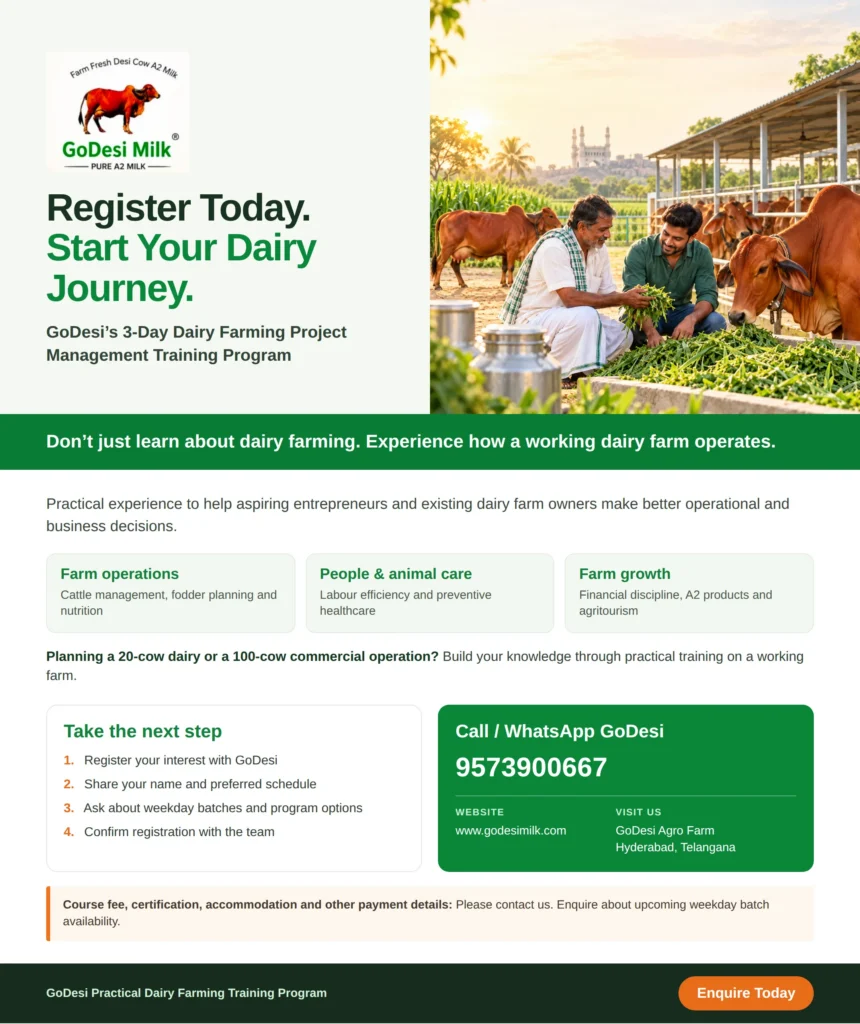
Take the Next Step
Register your interest in the GoDesi Practical Dairy Farming Training Program.
- Contact the GoDesi team by phone or WhatsApp.
- Share your name and preferred training schedule.
- Enquire about upcoming batch availability and program options.
- Confirm your registration with the team.
Call / WhatsApp: 9573900667
Website: www.godesimilk.com
Location: GoDesi Agro Farm, Hyderabad, Telangana
Course fee, certification, accommodation and other payment details: Please contact us.
Contact the GoDesi team today to enquire about registration and upcoming weekday batches.