
More Than an Animal — A Symbol of Life, Nourishment and Harmony
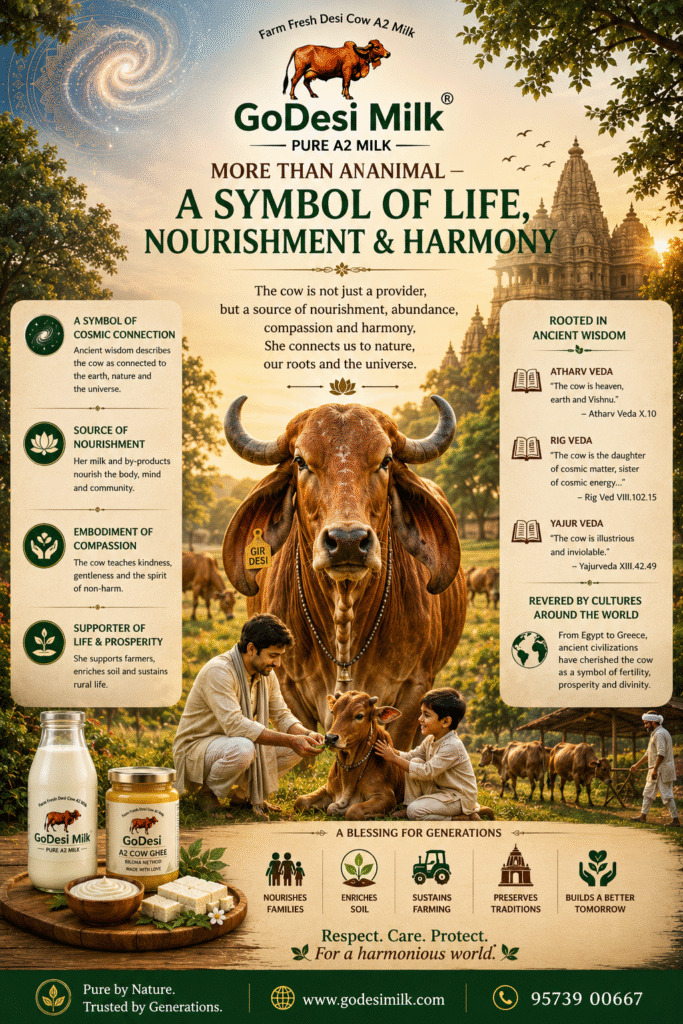
Across the Indian subcontinent, the cow has occupied a unique place in culture, agriculture, spirituality and rural life for thousands of years. Her significance goes far beyond the milk she provides. In traditional Indian thought, the cow represents nourishment, abundance, compassion, fertility and the interconnections of life.
The idea becomes even more fascinating when ancient texts describe the cow through a cosmic lens — not merely as a domesticated animal, but as a symbolic connection between the earth, nature and the larger universe.
For generations, this perspective has influenced the way Indian communities have cared for cattle and understood their relationship with nature.
The Cow and the Idea of the Cosmic Mother
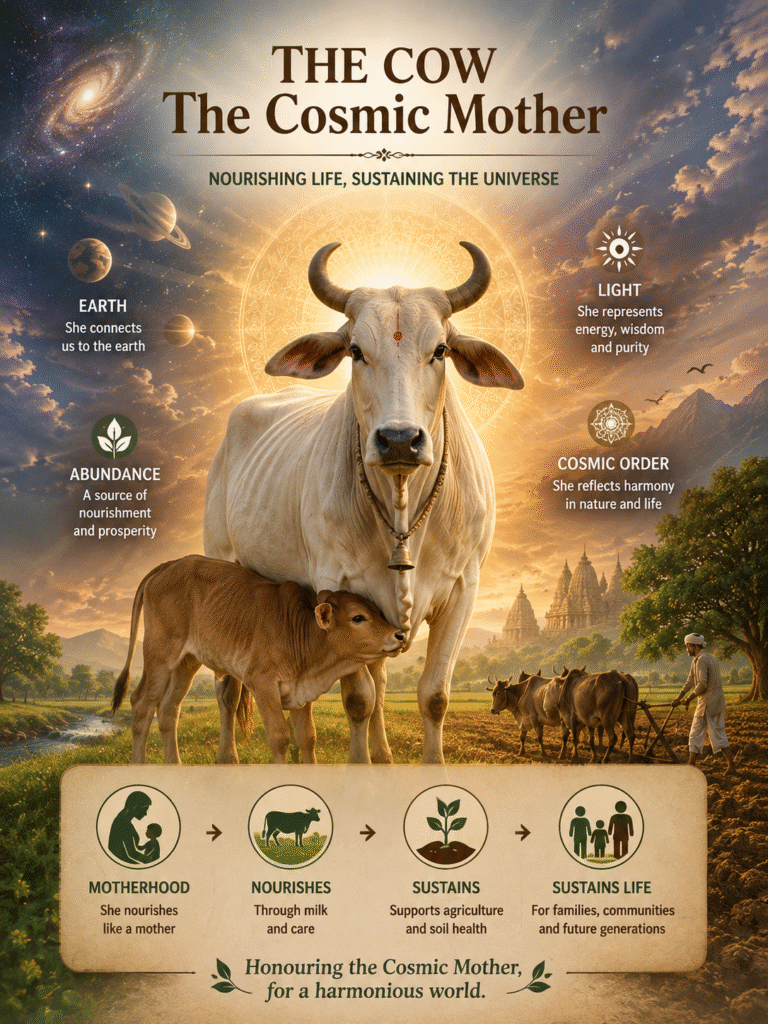
Ancient Indian traditions frequently use motherhood as a metaphor for the cow. Just as a mother nourishes her children, the cow gives nourishment through milk and supports a wider agricultural ecosystem.
The Vedic tradition contains several references that associate the cow with concepts such as earth, abundance, light and cosmic order. Descriptions such as Aditi, meaning the boundless or unlimited, provide a powerful symbolic image of nature as something vast, generous and sustaining.
This does not necessarily mean that ancient descriptions should be interpreted as modern scientific statements. Rather, they reveal how deeply earlier societies connected animals, agriculture, nature and spirituality.
A Philosophy of Nourishment
The importance of the cow historically came from more than milk.
A traditional dairy ecosystem could provide:
- Milk and fermented dairy foods
- Ghee and other milk products
- Organic manure for agriculture
- Natural inputs for soil management
- Support for farming communities
- Draught and agricultural assistance in earlier rural economies
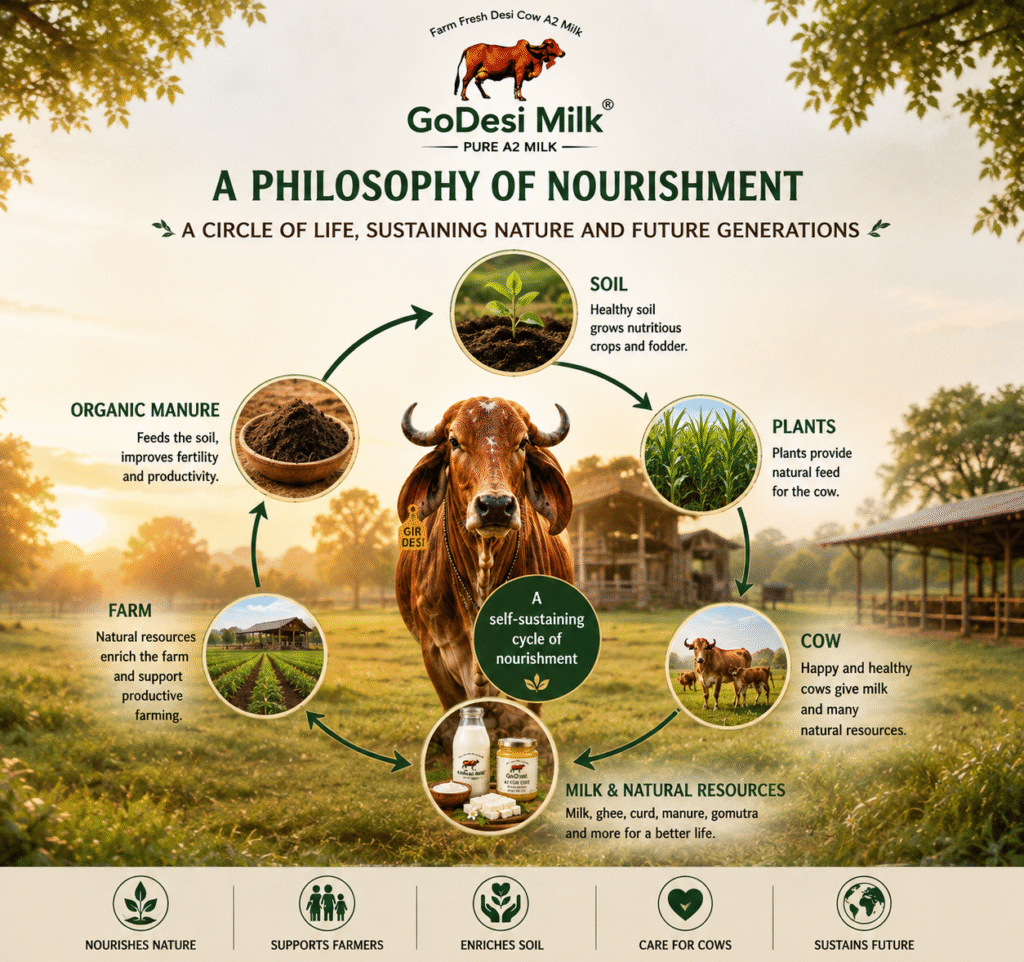
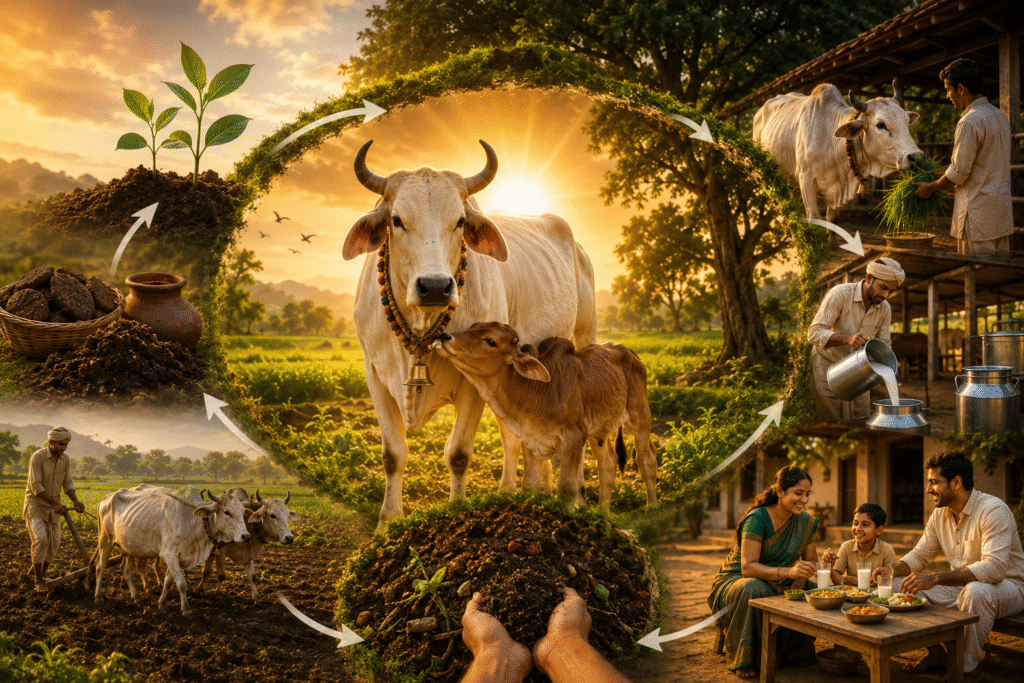
In this sense, the cow became part of a circular relationship between farm, soil, animals and people.
What the farm produced could nourish the animal, while what the animal returned to the farm could contribute to soil fertility.
The relationship was not simply:
Cow → Milk → Human
It was closer to:
Soil → Plants → Cow → Milk & Natural Resources → Farm → Soil
That circularity is one reason the cow has remained an important symbol in traditional Indian agriculture.
Why the Cow Became a Symbol of Compassion
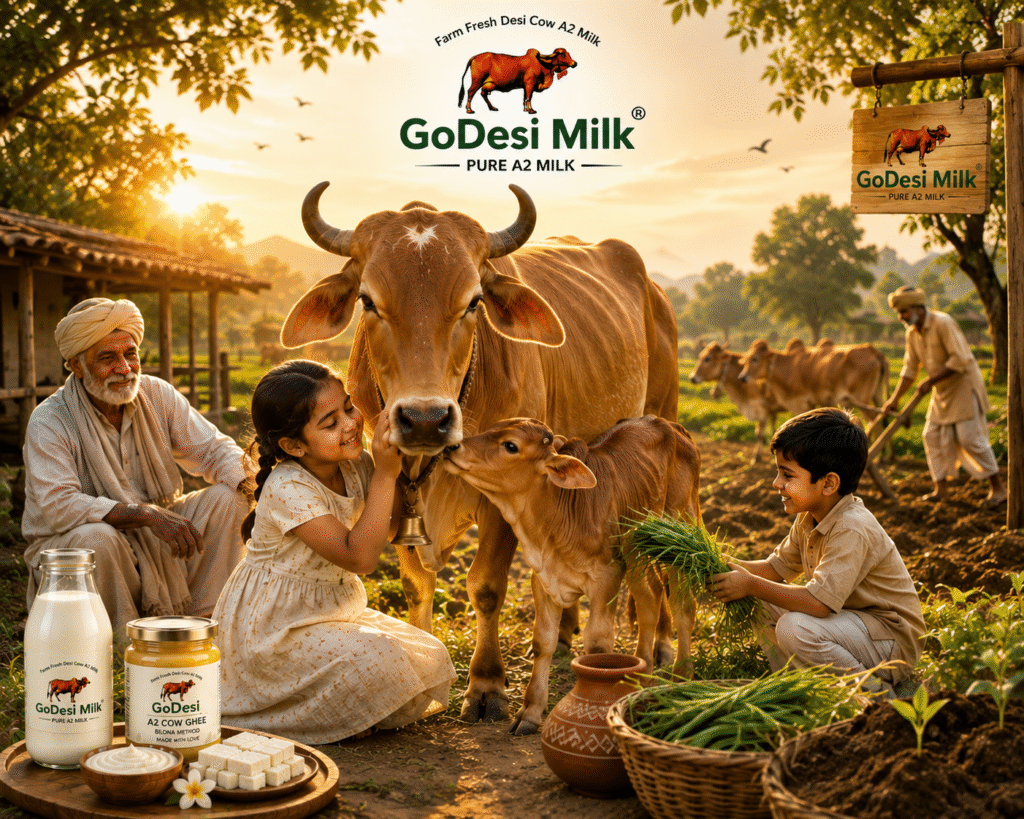
The Sanskrit tradition contains several terms associated with the protection and non-harm of cattle. The concept of Aghanya, often interpreted as “one who should not be killed,” reflects the reverence given to cows in certain Vedic passages.
Over time, this reverence developed into broader cultural practices surrounding cow care, protection and responsible husbandry.
The spiritual symbolism is equally powerful.
The cow’s calm presence has often been associated with peace. Her role as a source of nourishment has connected her with motherhood. Her importance to agriculture has linked her with prosperity. And her relationship with the land has made her a symbol of ecological balance.
From Krishna’s Gopala Tradition to Rural India
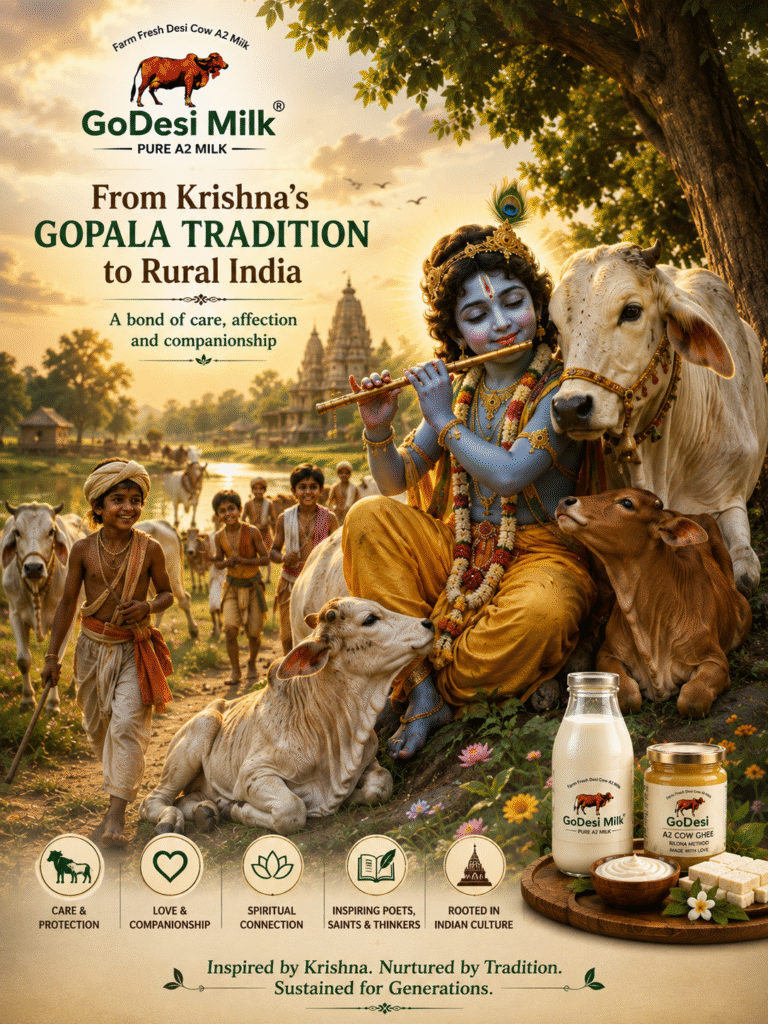
The cultural image of the cow is also inseparable from Krishna, who is traditionally known by names such as Gopala and Govinda — names connected with the care and protection of cows.
Stories of Krishna growing up among cows and cowherds created an enduring cultural image of a relationship based not merely on ownership, but on care, affection and companionship.
This tradition influenced generations of poets, saints and philosophers across India.
The cow therefore became part of India’s artistic, literary and spiritual imagination — appearing in devotional poetry, paintings, temple traditions, folk culture and rural celebrations.
A Global Perspective
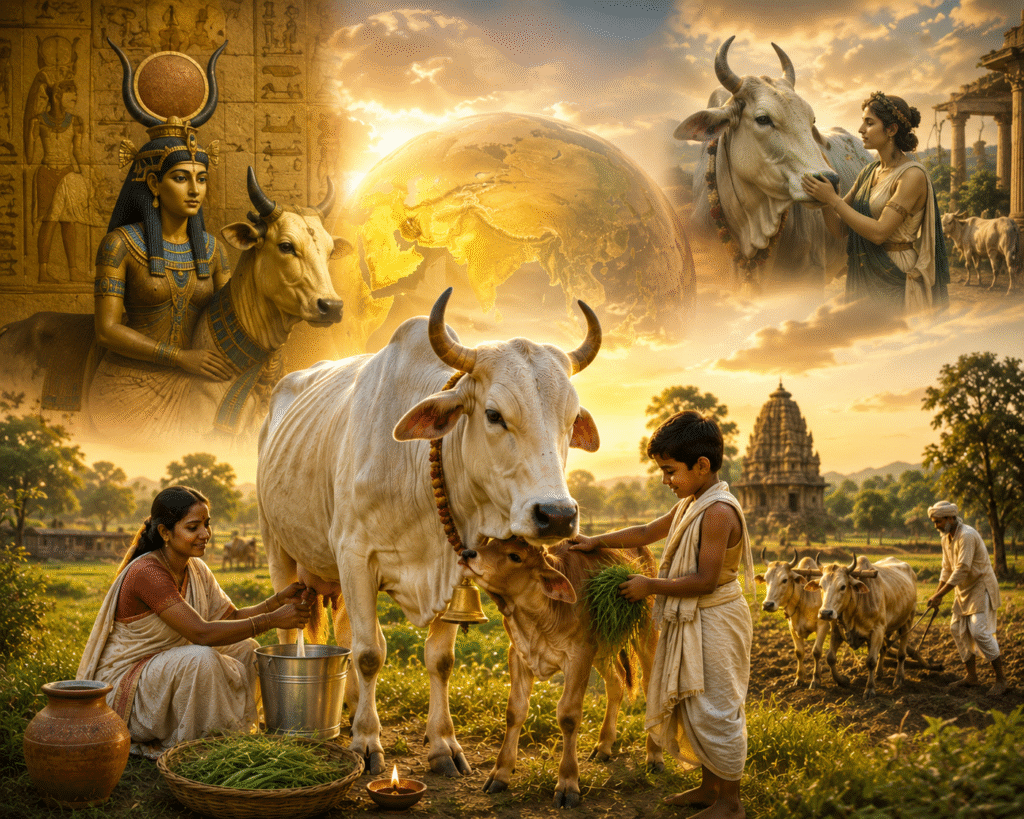
Interestingly, the symbolic association between cows and fertility or motherhood is not unique to India.
Ancient Egyptian traditions associated the goddess Hathor with the cow, while cattle also appeared in the mythology and symbolism of other ancient civilizations.
These parallels remind us of something fundamental: early agricultural societies depended heavily on animals for food, farming and survival. It is therefore unsurprising that cattle came to represent fertility, abundance, nourishment and life itself in different cultures.
The Indian tradition developed its own distinctive spiritual interpretation of this relationship.
What Does This Mean Today?
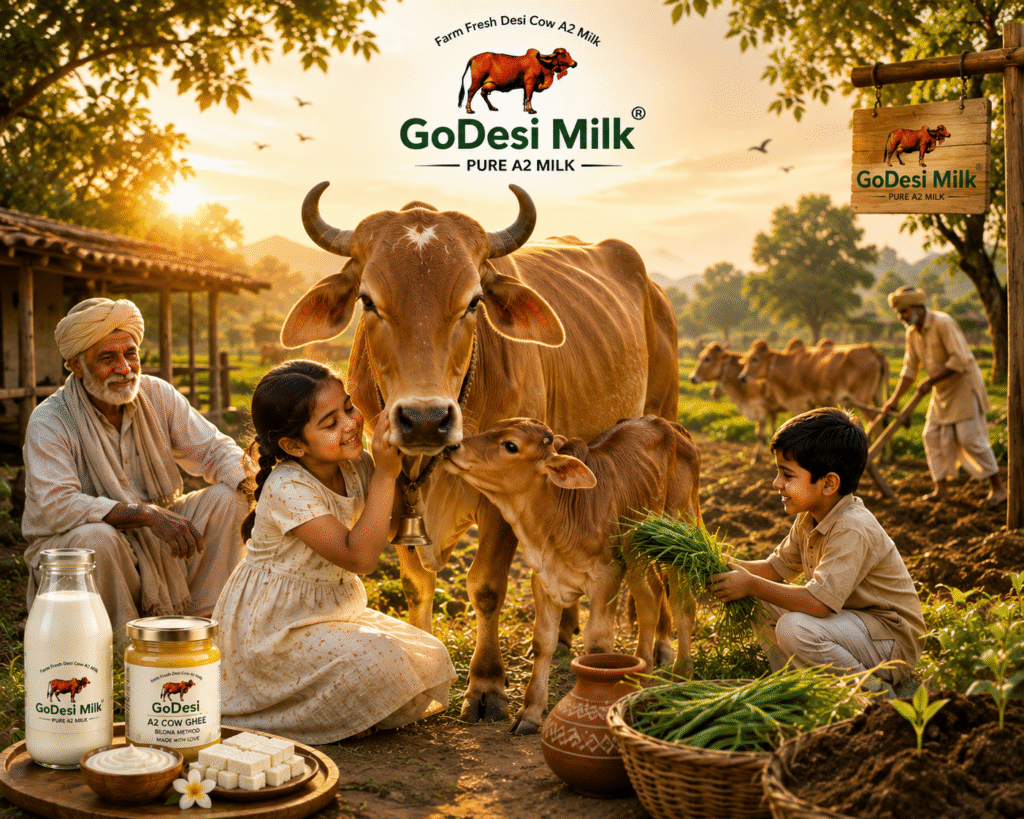
In the modern world, respecting the traditional importance of the cow should not simply mean looking backward.
It can also encourage us to ask a contemporary question:
Can dairy farming become more compassionate, sustainable and environmentally responsible?
Modern dairy systems have the opportunity to combine traditional knowledge with scientific animal husbandry, veterinary care, nutrition management, hygiene, technology and responsible farm planning.
The goal should be an ecosystem in which:
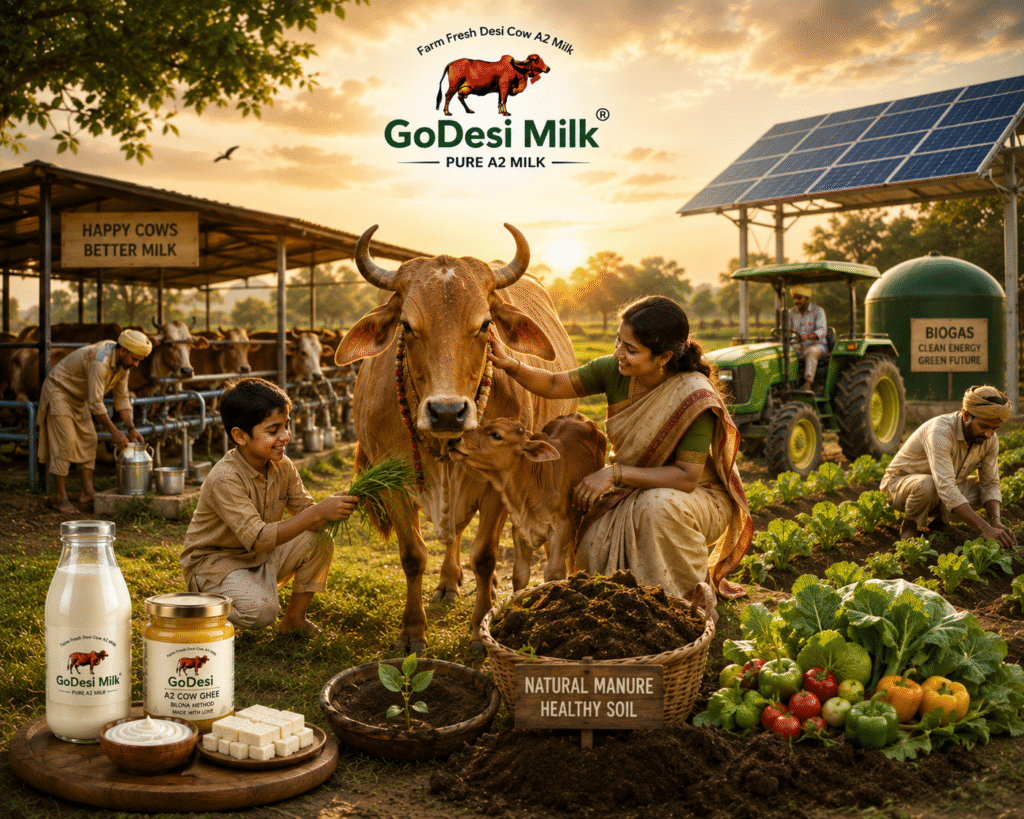
Healthy animals → responsible farming → quality dairy products → healthy consumers → productive soil → sustainable agriculture
This is where the traditional idea of the cow as a giver of nourishment can meet the needs of modern agriculture.
The GODesi Perspective
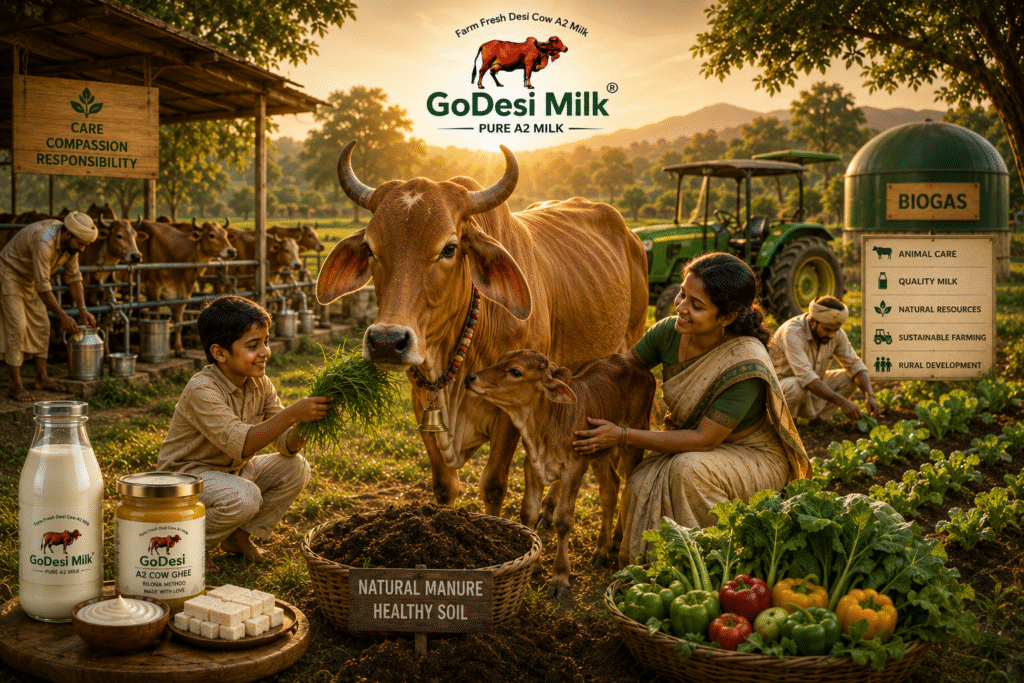
At GODesi, we believe that the relationship between people, cows and the land deserves to be approached with responsibility.
Our focus on Gir cows and dairy farming is not only about producing milk. It is about creating an ecosystem where animal care, responsible dairy production, agriculture and rural development can exist together.
A cow should not be viewed merely as a production unit.
She is a living part of the farm ecosystem.
The land provides nourishment to the animals. The animals provide milk and natural resources. Agriculture benefits from responsible recycling of farm resources. And consumers receive products that are connected to a real agricultural ecosystem.
This philosophy takes inspiration from India’s traditional respect for cattle while embracing the requirements of modern farming.
From Sacred Symbol to Sustainable Responsibility
The ancient image of the cow as a connection between earth, nourishment and cosmic order offers a meaningful lesson for today’s world.
We may understand those ancient descriptions spiritually, culturally or symbolically, but the underlying message remains relevant:
Life is interconnected.
The health of the soil affects the plants.
The plants affect the animals.
The health and care of animals affect the quality of the farm.
And the farm ultimately affects the people who depend upon it.
Perhaps that is why the cow has remained such a powerful symbol for so many generations.
She represents not only what we receive from nature, but also our responsibility toward nature.
A Living Legacy
The traditional Indian relationship with the cow is therefore much larger than milk.
It is a story of nourishment, agriculture, compassion, culture and interconnected living.
As agriculture moves toward more sustainable models, the wisdom embedded in traditional farming systems can inspire new approaches — provided it is combined thoughtfully with modern science, animal welfare and responsible management.
The cow can then be understood not simply as a symbol of the past, but as part of a sustainable vision for the future.
GODesi — Respecting the roots. Building a responsible future.
Reference
This article has been independently written and developed using the following article as a reference for its discussion of traditional and historical perspectives on the cow:
“Cow as daughter of cosmic matter” — Speaking Tree / The Times of India
Note: The historical, religious and scriptural interpretations discussed above represent traditional perspectives. They should be understood in their cultural and historical context and should not automatically be treated as modern scientific claims.